

Jan - Mar 2024
Jan - Mar 2024
Jan - Mar 2024
HappiNest
HappiNest
Parent View:
Child View:
PROBLEM
PROBLEM
PROBLEM
Parents spend decades dedicating their lives to their children - from providing them with necessities such as food and shelter to spending quality time with them and instilling morals.
However, as children mature and embark on their own journeys - whether it be for higher education or personal pursuits - parents are faced with the emotional challenges and lifestyle changes of the “empty nester syndrome.”
This transition can elevate feelings of loneliness and desolation, leading to depression, anxiety, and aggravation of persisting health conditions.
Parents spend decades dedicating their lives to their children - from providing them with necessities such as food and shelter to spending quality time with them and instilling morals.
However, as children mature and embark on their own journeys - whether it be for higher education or personal pursuits - parents are faced with the emotional challenges and lifestyle changes of the “empty nester syndrome.”
This transition can elevate feelings of loneliness and desolation, leading to depression, anxiety, and aggravation of persisting health conditions.
SOLUTION
SOLUTION
SOLUTION
To provide a solution to this issue, we designed an app named HappiNest, which connects empty-nester parents and children through online activities, family journaling, and chatting.
To provide a solution to this issue, we designed an app named HappiNest, which connects empty-nester parents and children through online activities, family journaling, and chatting.
THE TEAM
THE TEAM
THE TEAM
Our team consisted of 5 team members, all with varying levels of design and Figma experience. We were guided by our teaching assistants and professor to design a beautiful product and present it to the class by the end of the quarter.
Our team consisted of 5 team members, all with varying levels of design and Figma experience. We were guided by our teaching assistants and professor to design a beautiful product and present it to the class by the end of the quarter.
KICKING OFF: RESEARCHING OUR USER GROUPS
KICKING OFF: RESEARCHING OUR USER GROUPS
Before conducting our user interviews, we defined two user classes.
Before conducting our user interviews, we defined two user classes.
Full-Time Working Parent
Parents who have dedicated less time to their children while they were at home, focusing more on other activities and responsibilities.
Parents who have dedicated less time to their children while they were at home, focusing more on other activities and responsibilities.
Stay-At-Home/Part-Time
Working Parent
Stay-At-Home/Part-Time Working Parent
Parents who have dedicated a large amount of time to their children while they were at home.
Parents who have dedicated a large amount of time to their children while they were at home.
WHAT DID WE FIND?
WHAT DID WE FIND?
Full-Time Working Parent
Users found it difficult to express love for their children now that they live far away and experiences a notable void with the absence of his children.
Users emphasize the importance of new hobbies and regular communication to cope with the empty nester syndrome.
Users found it difficult to express love for their children now that they live far away and experiences a notable void with the absence of his children.
Users emphasize the importance of new hobbies and regular communication to cope with the empty nester syndrome.
Stay-At-Home/Part-Time Working Parent
Users would find it beneficial if new empty nesters are able to network with others in the same boat so that they can share experiences, connect, give advice, and support.
Users would be interested in journaling for their children and if they journaled back (i.e. family journal)
Users would find it beneficial if new empty nesters are able to network with others in the same boat so that they can share experiences, connect, give advice, and support.
Users would be interested in journaling for their children and if they journaled back (i.e. family journal)
WHAT DID WE FIND?
Full-Time Working Parent
Users found it difficult to express love for their children now that they live far away and experiences a notable void with the absence of his children.
Users emphasize the importance of new hobbies and regular communication to cope with the empty nester syndrome.
Stay-At-Home/Part-Time Working Parent
Users would find it beneficial if new empty nesters are able to network with others in the same boat so that they can share experiences, connect, give advice, and support.
Users would be interested in journaling for their children and if they journaled back (i.e. family journal)
Stay-At-Home/Part-Time Working Parent
Users would find it beneficial if new empty nesters are able to network with others in the same boat so that they can share experiences, connect, give advice, and support.
Users would be interested in journaling for their children and if they journaled back (i.e. family journal)
REDEFINING THE PROBLEM
REDEFINING THE PROBLEM
We noticed that a lot of parents also struggled with communicating with their children due to scheduling conflicts, not wanting to overstep any boundaries, and due to the lack of engaging activities to do over a simple video call.
As a result, we incorporated a third class: the children of empty nesters (this group can include children who are at university or are working far away from home).
Therefore, we decided to conduct interviews with children of empty nesters as well.
Here were the insights for those interviews:
Users suggested the need for a dynamic platform that can adapt to the unpredictable nature of his and his parents’ lives, offering both real-time and asynchronous connectivity.
Users face challenges in communication that are not just about time but also about the quality and depth of interactions.
We noticed that a lot of parents also struggled with communicating with their children due to scheduling conflicts, not wanting to overstep any boundaries, and due to the lack of engaging activities to do over a simple video call.
As a result, we incorporated a third class: the children of empty nesters (this group can include children who are at university or are working far away from home).
Therefore, we decided to conduct interviews with children of empty nesters as well.
Here were the insights for those interviews:
Users suggested the need for a dynamic platform that can adapt to the unpredictable nature of his and his parents’ lives, offering both real-time and asynchronous connectivity.
Users face challenges in communication that are not just about time but also about the quality and depth of interactions.
Overall, users were interested in a platform
that encourages sharing day-to-day activities
and support during times of loneliness.
Overall, users were interested in a platform
that encourages sharing day-to-day activities
and support during times of loneliness.
GOALS
GOALS
Class 1: Stay-At-Home
Parents
Connect them with other empty-nester parents who are in the same situation as well as a larger community with resources so that they can share advice and provide support.
Connect them with other empty-nester parents who are in the same situation as well as a larger community with resources so that they can share advice and provide support.
Class 2: Working Parents
Help them address the inability they face in communicating their emotions to their children and find ways in which they can connect with their children regardless of their busy schedules.
Help them address the inability they face in communicating their emotions to their children and find ways in which they can connect with their children regardless of their busy schedules.
Class 3: Children of Empty Nesters
Facilitating better coordination between children and their empty-nester parents to enhance communication, scheduling visits, or calls to overcome physical and schedule-related distances.
Class 3: Children of
Empty Nesters
Facilitating better coordination between children and their empty-nester parents to enhance communication, scheduling visits, or calls to overcome physical and schedule-related distances.
Facilitating better coordination between children and their empty-nester parents to enhance communication, scheduling visits, or calls to overcome physical and schedule-related distances.
SKETCHING AND STORYBOARDING
SKETCHING AND STORYBOARDING
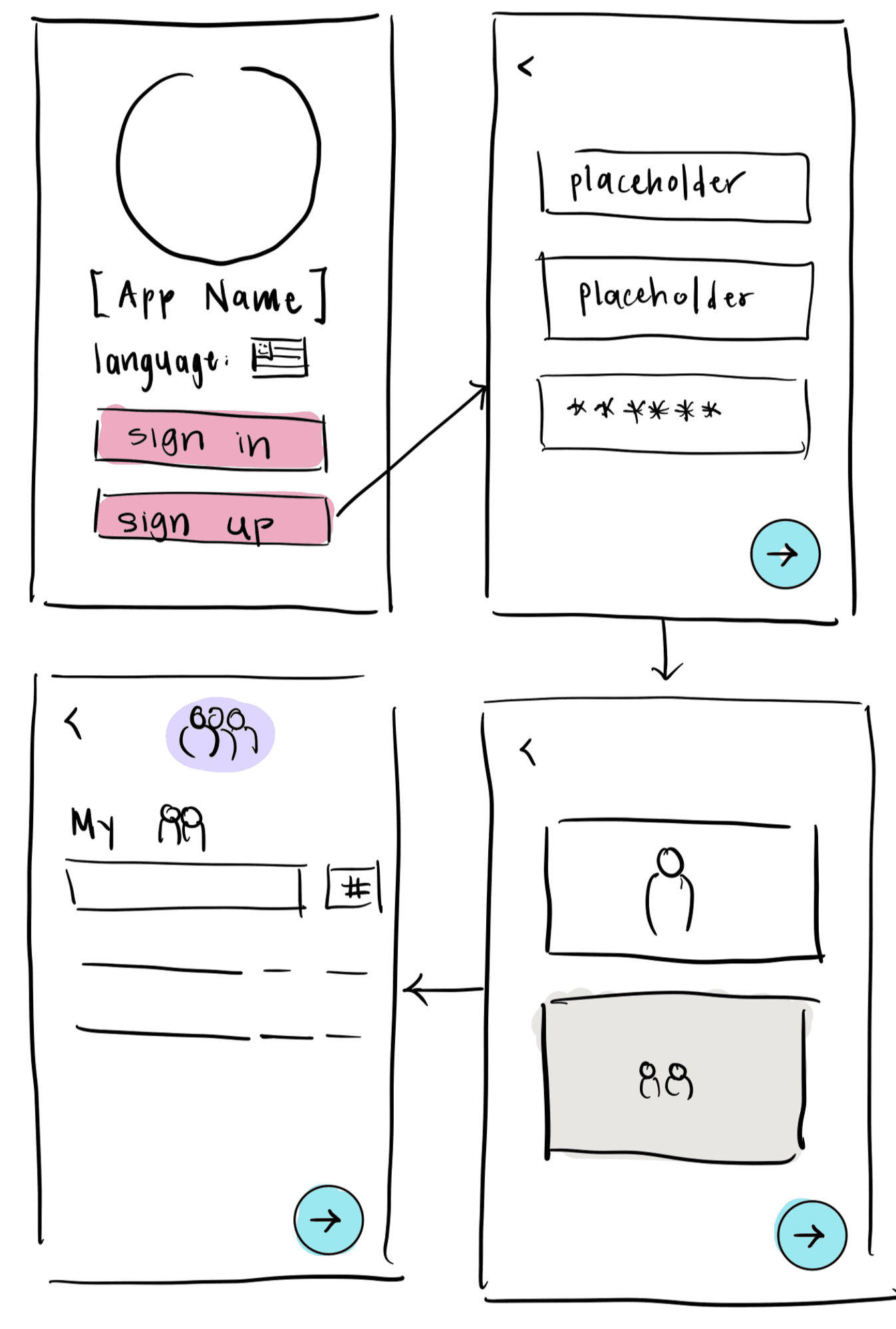
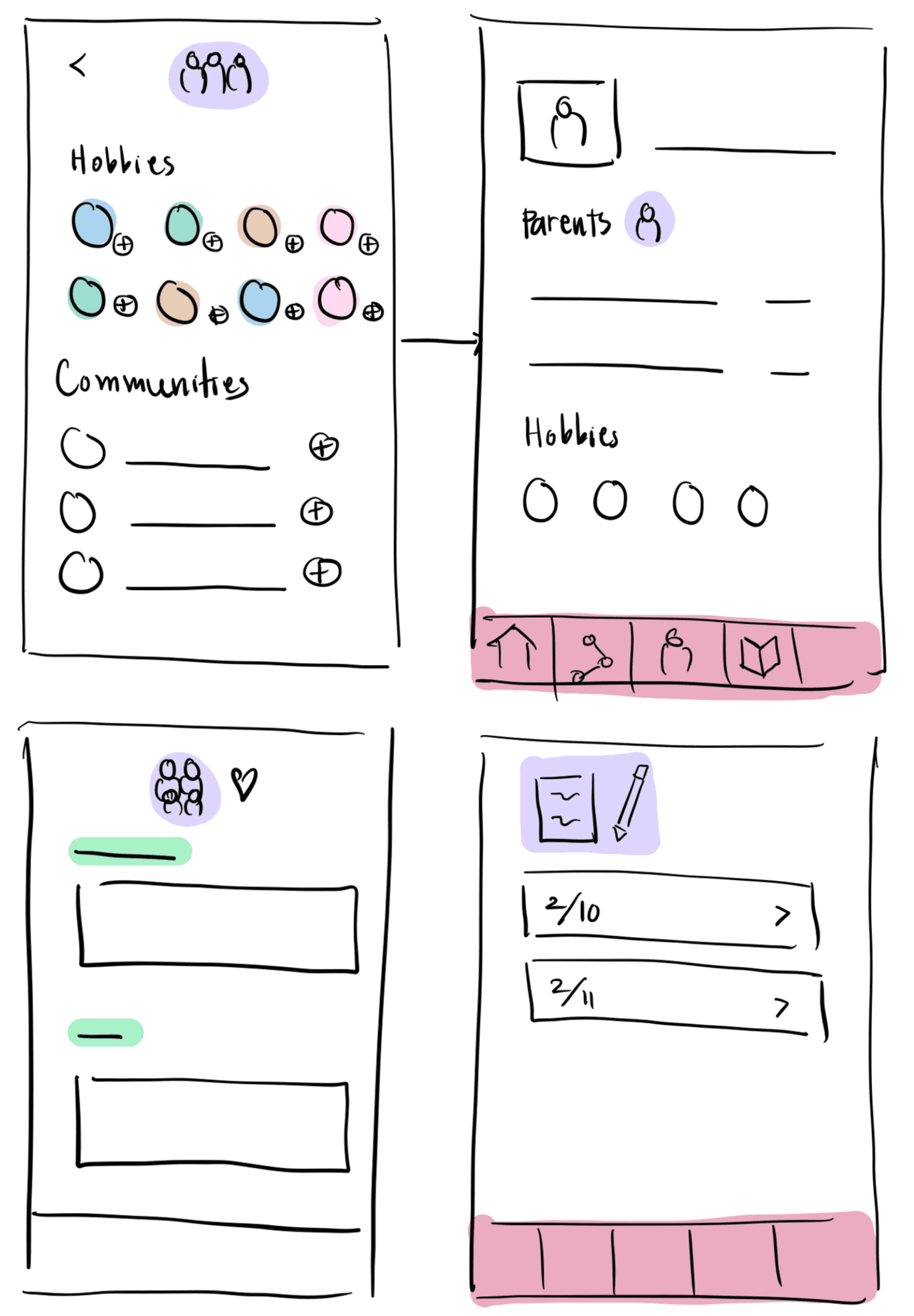
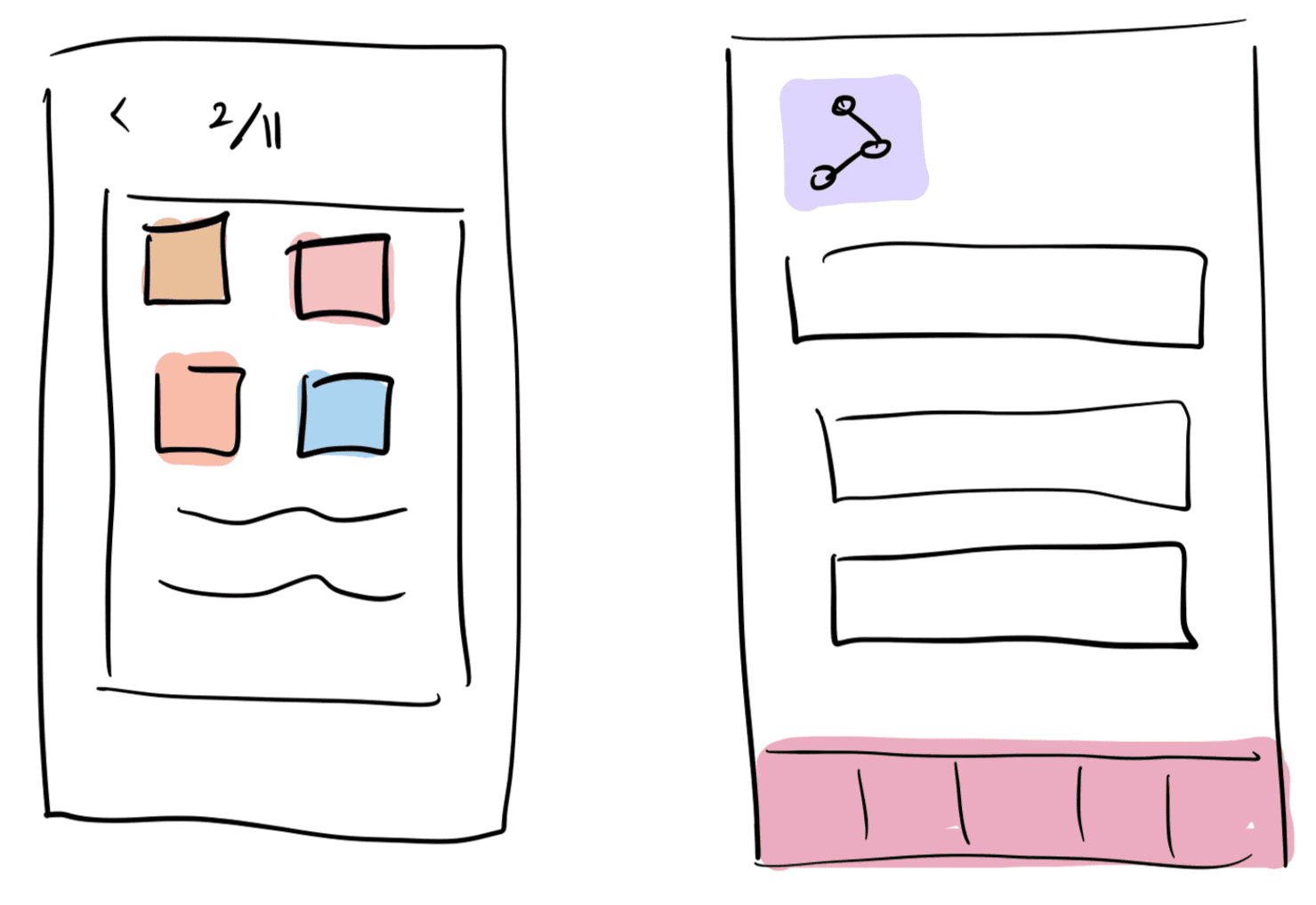
This is a barebones mockup of what the app would look like. The user can choose whether they are a parent or a child.
The user can select hobbies that they are interested in and schedule activities with their parents (if they are a child) or their children (if they are a parent). If the user is a parent, they can join communities.
This is a barebones mockup of what the app would look like. The user can choose whether they are a parent or a child.
The user can select hobbies that they are interested in and schedule activities with their parents (if they are a child) or their children (if they are a parent). If the user is a parent, they can join communities.
Storyboards
Storyboards
STORYBOARDS
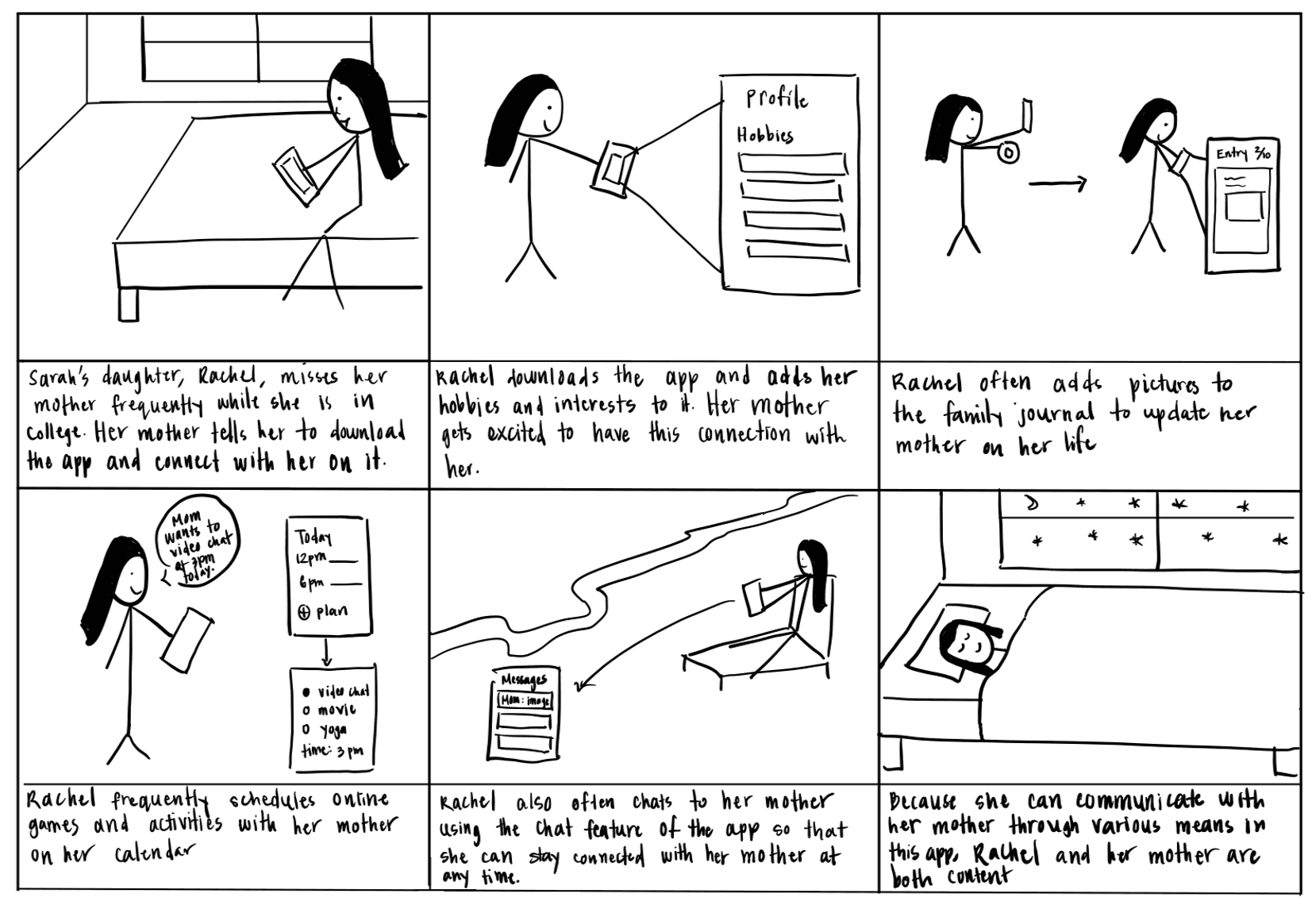
After constructing our lo-fis, we created three storyboards based on our three user classes and some of the features we came up with.
User class: Children of the empty nester parents. Rachel is a girl who misses her mother and downloads the app to connect and talk to her mother.
After constructing our lo-fis, we created three storyboards based on our three user classes and some of the features we came up with.
User class: Children of the empty nester parents. Rachel is a girl who misses her mother and downloads the app to connect and talk to her mother.
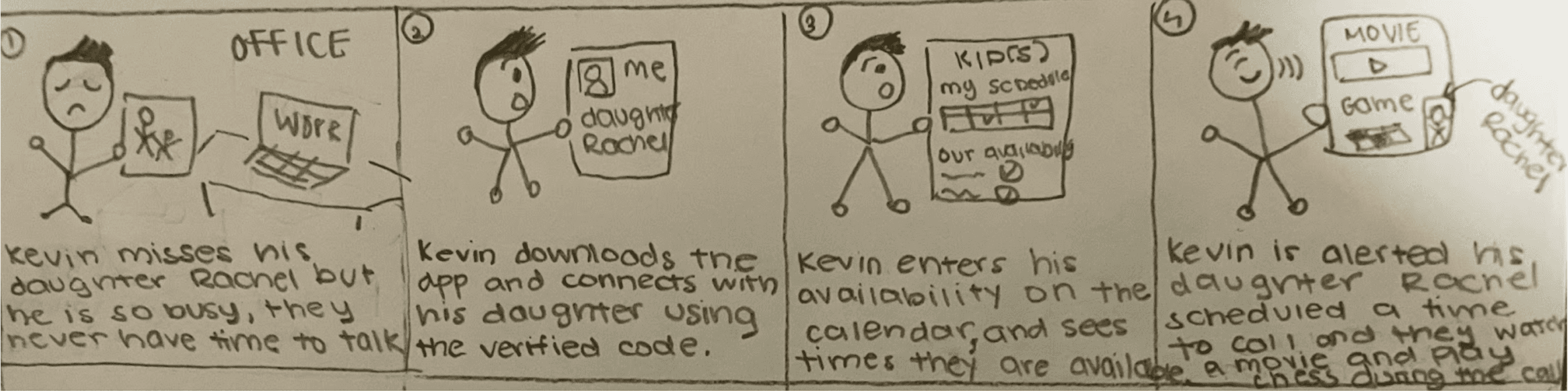
User class: Full-time Working Parent. Kevin misses his daughter and because of his busy schedule, he talks to her rarely. So, he downloads the app and does fun activities with her to bridge the gap.
User class: Full-time Working Parent. Kevin misses his daughter and because of his busy schedule, he talks to her rarely. So, he downloads the app and does fun activities with her to bridge the gap.
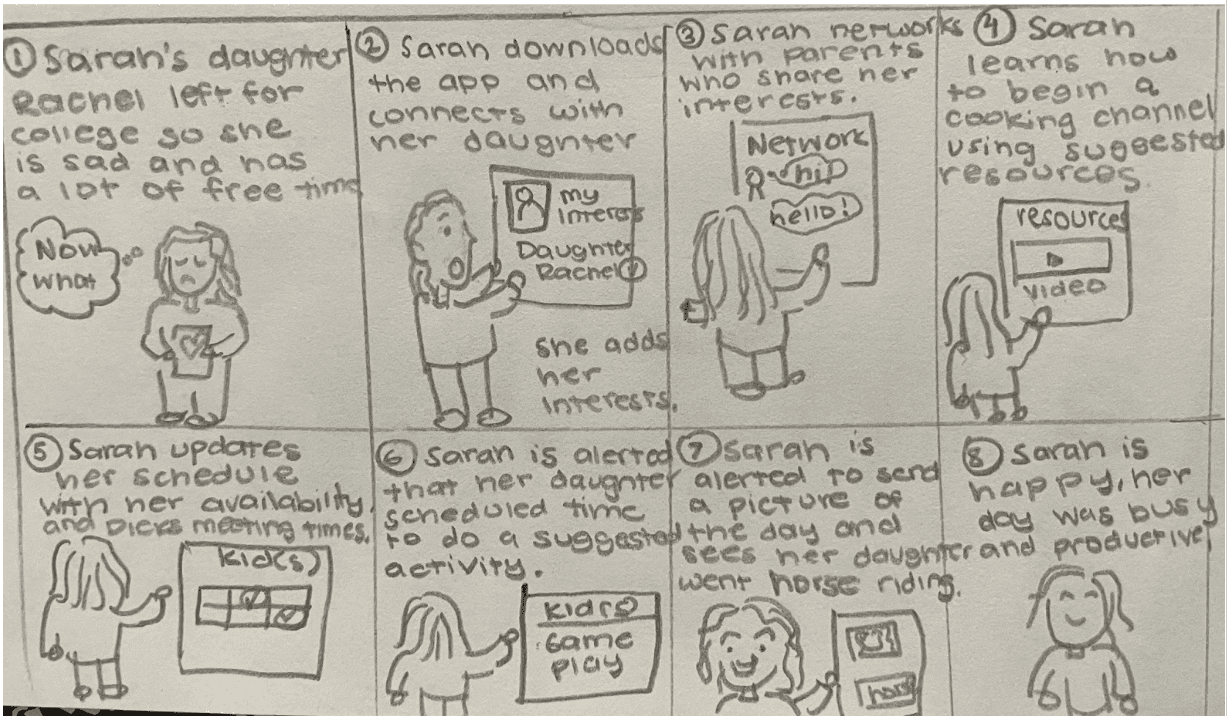
User class: Stay-at-home/Part-time Working Parent. Sarah misses her daughter Rachel, who is away at college, so she downloads the app and networks with other parents in her area who are also empty-nesters. She also communicates with Rachel and schedules fun online activities with her.
User class: Stay-at-home/Part-time Working Parent. Sarah misses her daughter Rachel, who is away at college, so she downloads the app and networks with other parents in her area who are also empty-nesters. She also communicates with Rachel and schedules fun online activities with her.
CREATING THE DESIGNS
CREATING THE DESIGNS
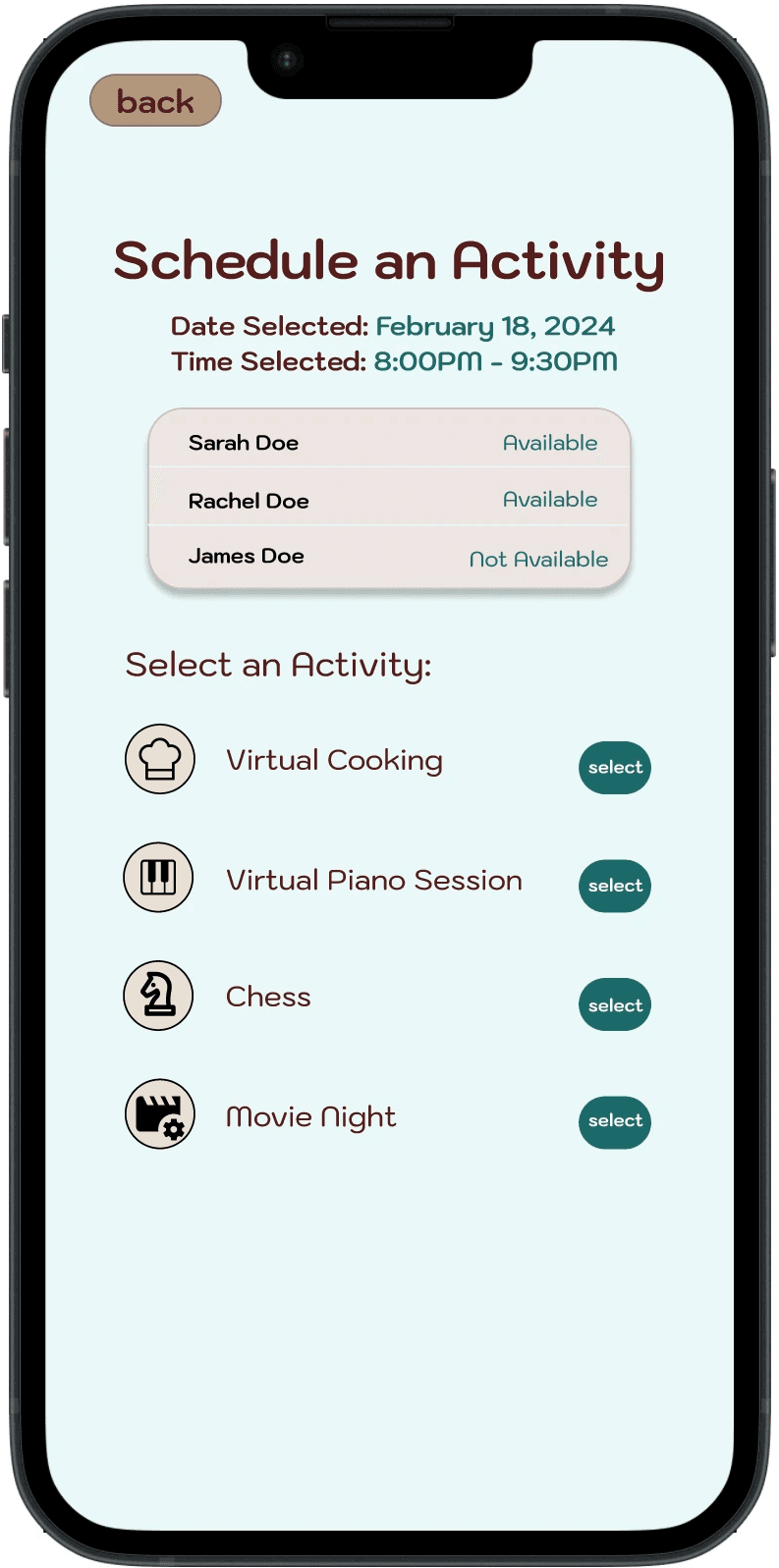
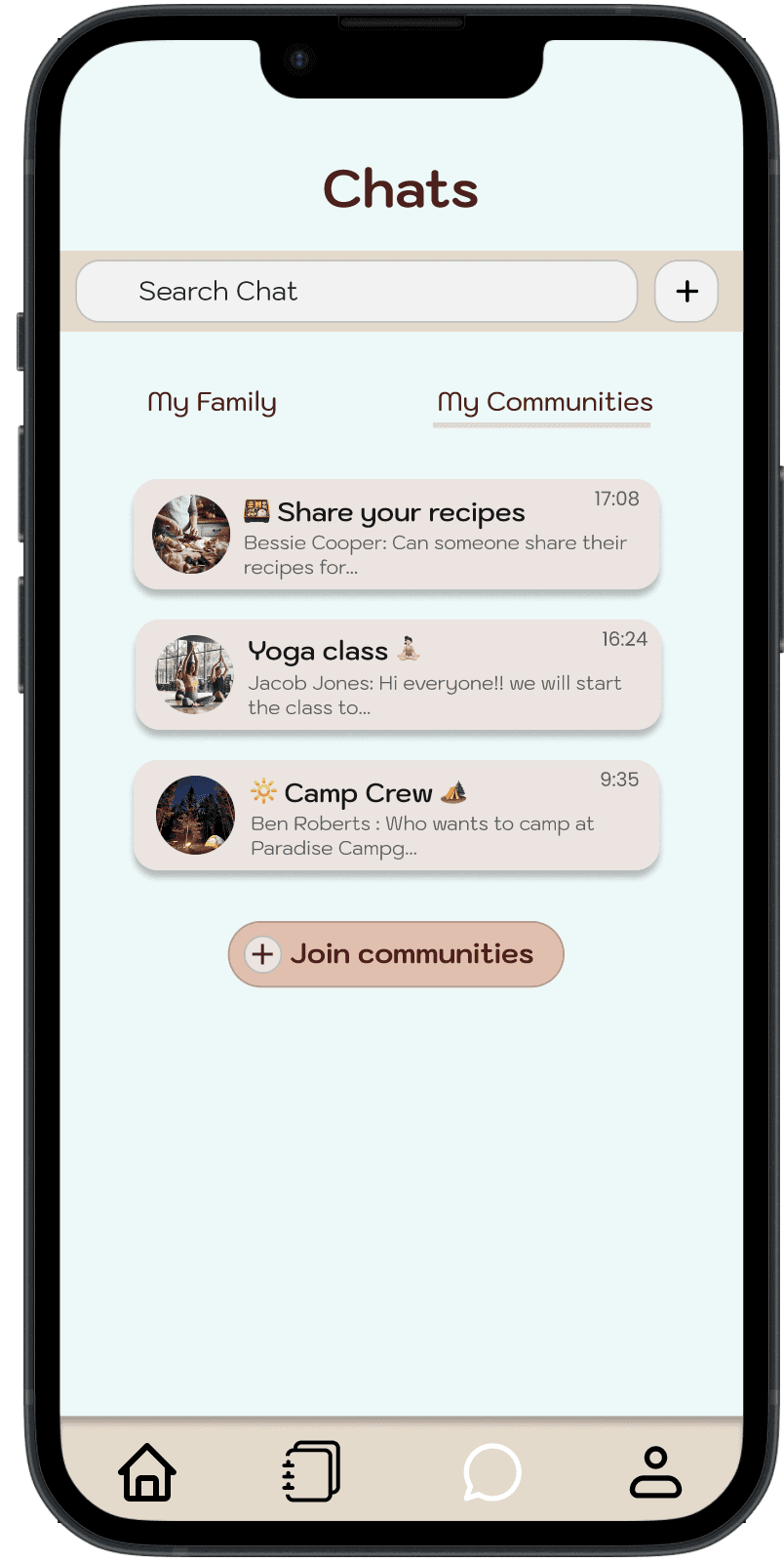
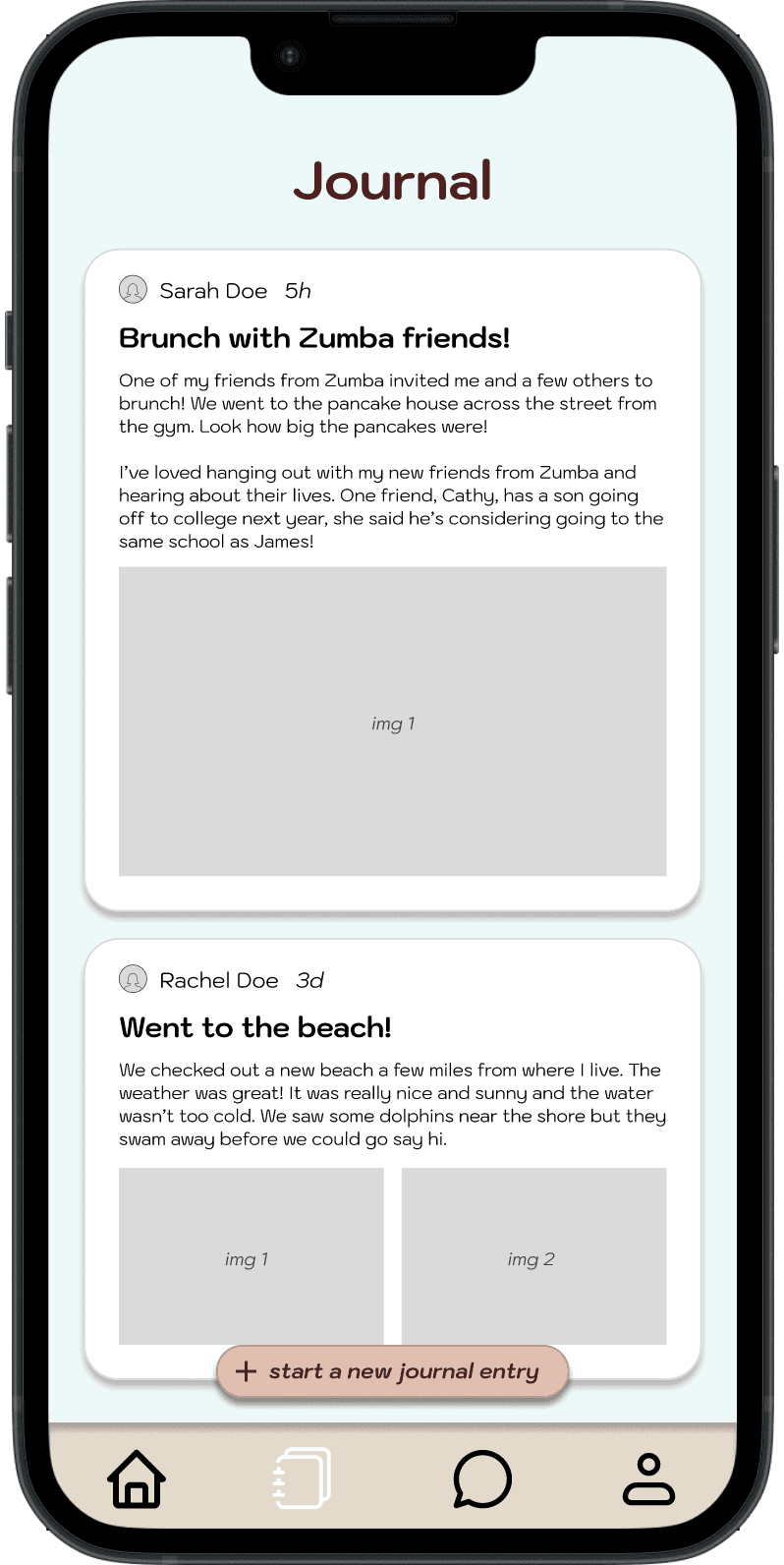
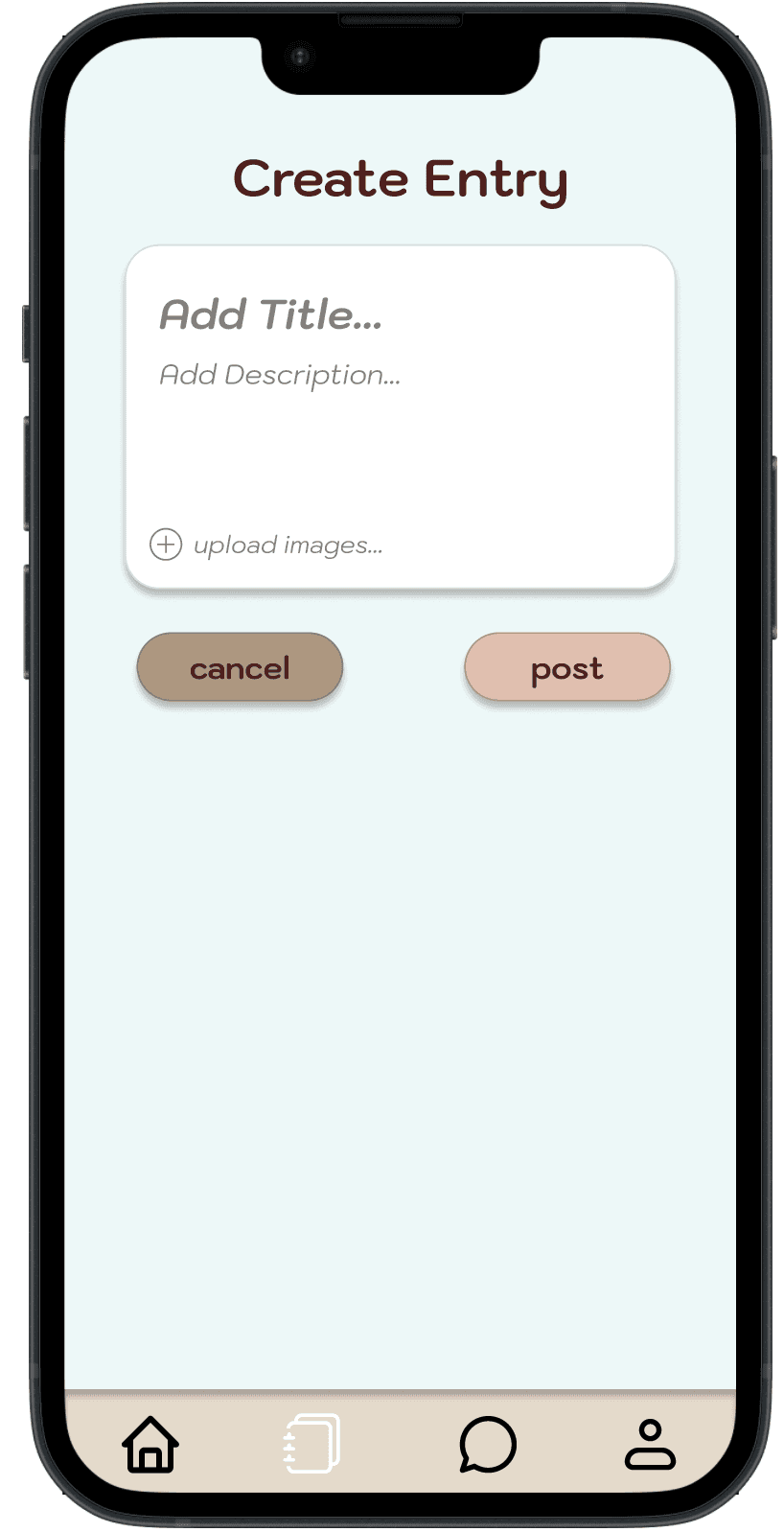
After finishing our mockups and storyboards, we created our hi-fi wireframes, narrowing our app down to 3 main features:
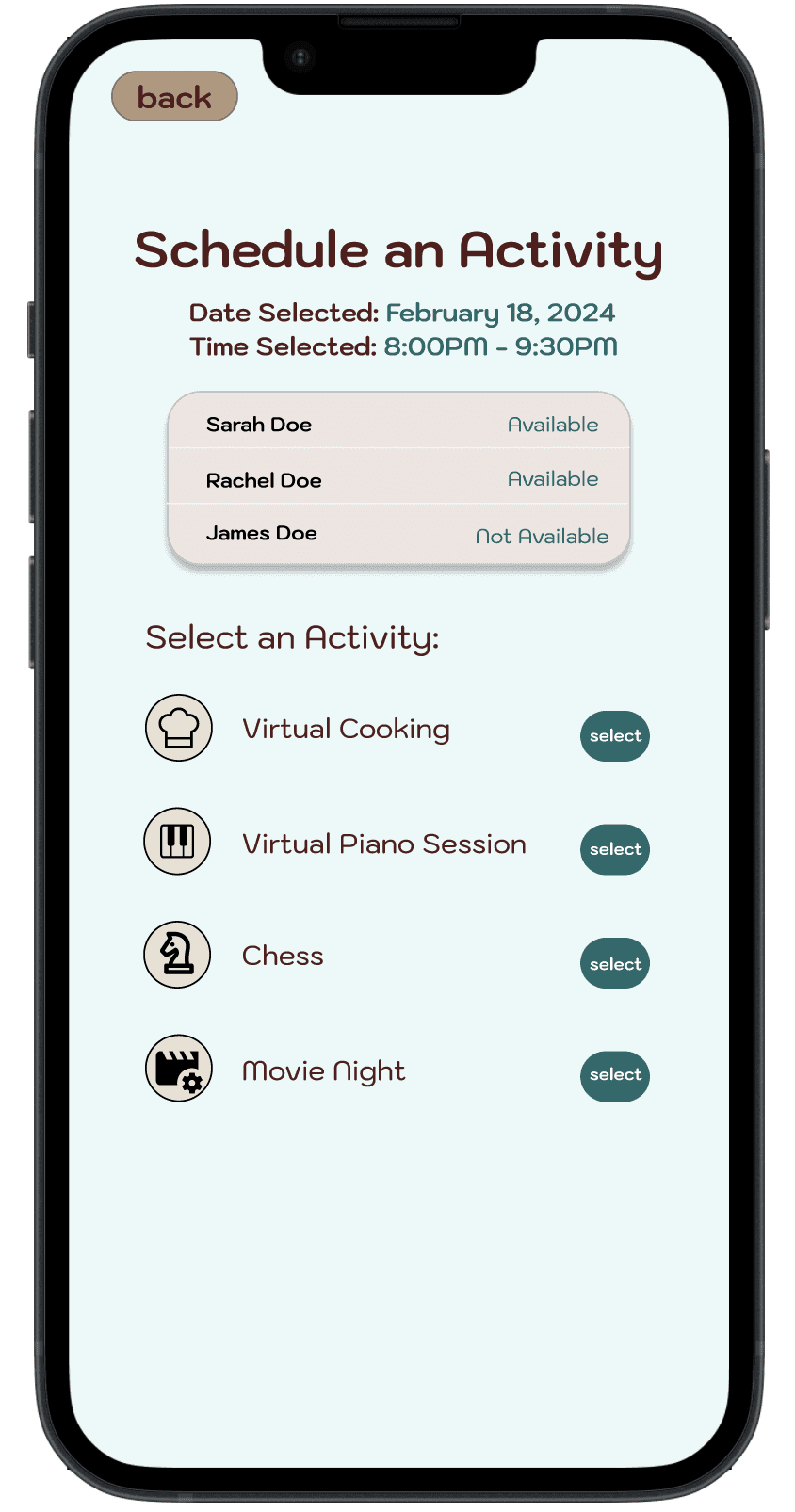
Online activities (includes scheduling activities),
After finishing our mockups and storyboards, we created our hi-fi wireframes, narrowing our app down to 3 main features:
Online activities (includes scheduling activities),

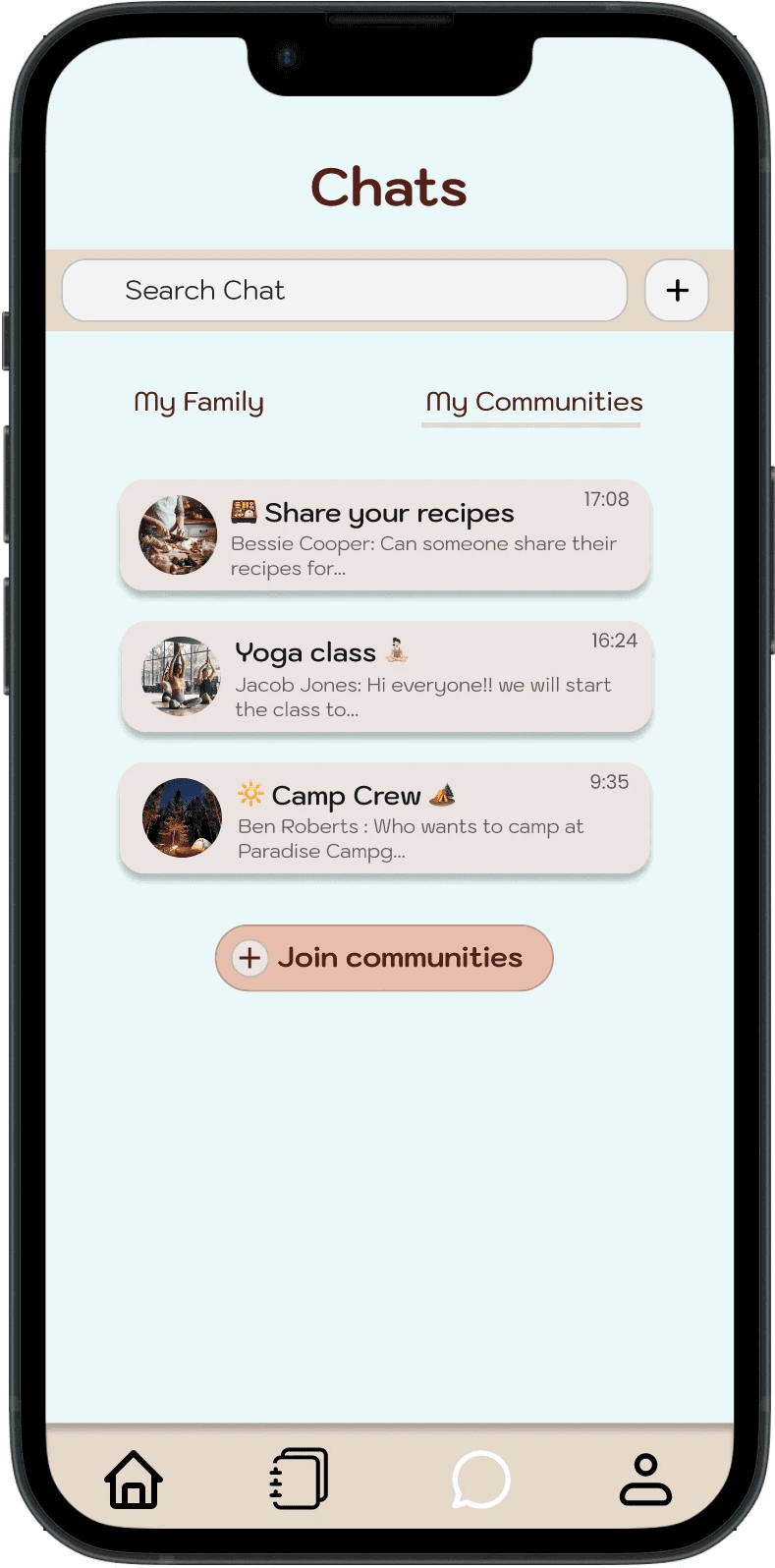
chats (includes community chats for parents),
chats (includes community chats for parents),


and family journaling.
and family journaling.
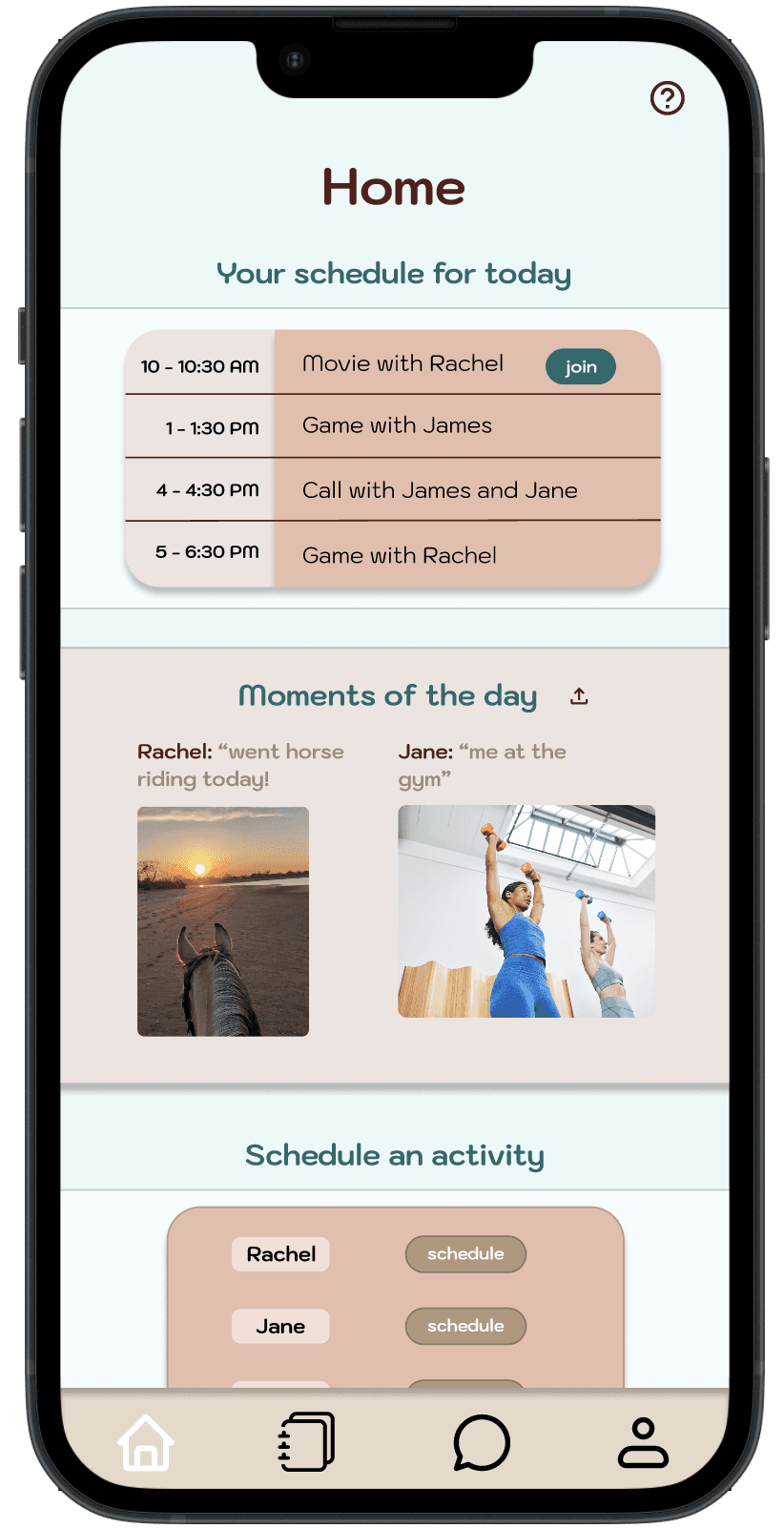
For the home page, we added a feature where the parent and the child see their schedule for the day, upload moments from the day, and schedule activities (and view community updates for the parent). In terms of signing up, parents and children can add each other through verification codes.
For the home page, we added a feature where the parent and the child see their schedule for the day, upload moments from the day, and schedule activities (and view community updates for the parent). In terms of signing up, parents and children can add each other through verification codes.
For the home page, we added a feature where the parent and the child see their schedule for the day, upload moments from the day, and schedule activities (and view community updates for the parent).
USER TESTING
USER TESTING
When we tested our first prototype with users, these were the main insights:
Our first prototype did not go into detail on how the scheduling aspect works.
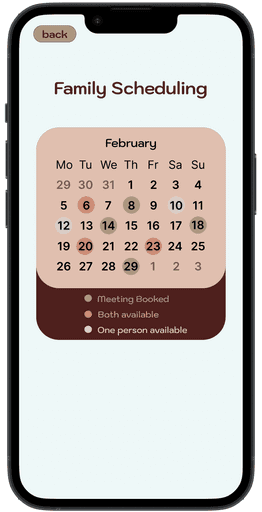
Fix: In the hi-fi prototype, the user can add your availability and see the color-coding and the “join” button to easily distinguish between when one person is available, when everyone is available and you can schedule a call, and when you have a call scheduled (brown = call scheduled, beige = both are available so can schedule a call, pink = only one person is available). The color scheme is also evident on the calendar itself where these colors are used to highlight the day.
When we tested our first prototype with users, these were the main insights:
Our first prototype did not go into detail on how the scheduling aspect works.
Fix: In the hi-fi prototype, the user can add your availability and see the color-coding and the “join” button to easily distinguish between when one person is available, when everyone is available and you can schedule a call, and when you have a call scheduled (brown = call scheduled, beige = both are available so can schedule a call, pink = only one person is available). The color scheme is also evident on the calendar itself where these colors are used to highlight the day.
Our first prototype had inconsistencies with the positioning of the headers, which made the transitions between the screens jarring.
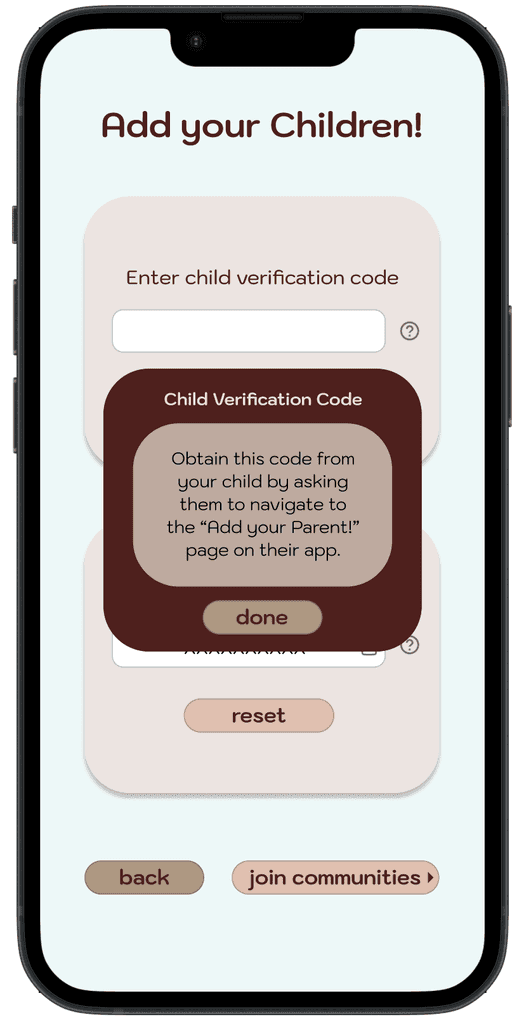
Users also indicated that for the Add your Parent/Child pages, the question mark icons didn’t lead anywhere, so we added help pop-ups to clarify what the verification codes are for.
Our first prototype had inconsistencies with the positioning of the headers, which made the transitions between the screens jarring.
Users also indicated that for the Add your Parent/Child pages, the question mark icons didn’t lead anywhere, so we added help pop-ups to clarify what the verification codes are for.

WHAT COULD WE HAVE DONE BETTER?
WHAT COULD WE HAVE DONE BETTER?
WHAT COULD WE HAVE DONE BETTER?
FURTHER FEATURE TESTING
Looking back at our features, I believe our scheduling functionality could use more changes, particularly with the color-coding aspect, which still causes some confusion for users. I would conduct additional testing and explore alternative ways to present this feature more intuitively.
UI CLEANUP
Our UI design features a pastel color palette with a mix of colors throughout the app. If we were to revisit the project work, I would prioritize creating a centralized design system that clearly defines our brand identity and components. This system would also establish a consistent grid layout for all the screens, solidifying the visual experience.
FURTHER FEATURE TESTING
Looking back at our features, I believe our scheduling functionality could use more changes, particularly with the color-coding aspect, which still causes some confusion for users. I would conduct additional testing and explore alternative ways to present this feature more intuitively.
UI CLEANUP
Our UI design features a pastel color palette with a mix of colors throughout the app. If we were to revisit the project work, I would prioritize creating a centralized design system that clearly defines our brand identity and components. This system would also establish a consistent grid layout for all the screens, solidifying the visual experience.
Kavya Verma
Contact
kavya.verma@gmail.com
Kavya Verma
Contact
kavya.verma@gmail.com
Kavya Verma
Contact
kavya.verma@gmail.com